Explained: Graphene, Graphene Oxide, and Reduced Graphene Oxide and Applications

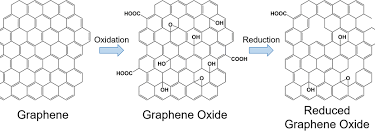
Explained: Graphene, Graphene Oxide, and Reduced Graphene Oxide and Their Applications Introduction In the world of advanced materials, graphene, graphene oxide (GO), and reduced graphene oxide (rGO) have emerged as highly promising substances with a wide range of applications. These materials are distinct forms of graphene, a two-dimensional (2D) carbon nanomaterial that has garnered significant

Read more 

Graphene oxide and reduced graphene oxide

GRAPHENE OXİDE Graphene oxide is derived by oxidation of graphite. Graphene oxide includes oxygen functional groups such as epoxide, hydroxyl, carboxyl groups. Graphene oxide can bind to other molecules. It is hydrophilic. Because of its properties, graphene oxide reaches a wide range of application fields. REDUCED GRAPHENE OXİDE Reduced graphene oxide is derived via reduction

Read more 

What is graphene?

Graphene is a nanomaterial with attractive properties such as 2630(m2/g) theoretical specific surface area, 250,000(cm2/Vs) electron mobility, and quantum Hall effect. 5000(W/mK) thermal conductivity, 1TPa elastic modulus, 97,4 % optical transmittance. Graphene has higher electrical conductivity than copper, 200 times stronger than steel, higher thermal conductivity than carbon nanotubes and diamond, higher specific surface area

Read more